

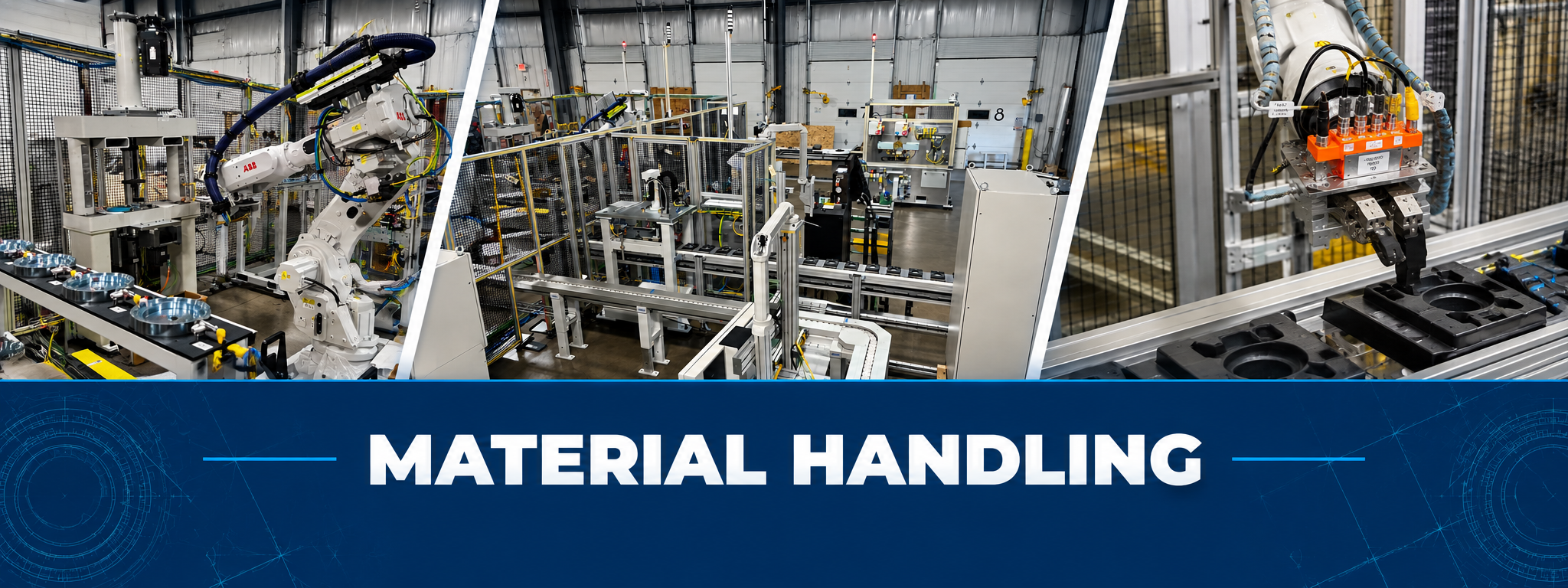
Automated Material Handling
Even a well-designed line can lose time moving parts between stations, whether it's a station sitting idle while it waits for parts or a part arriving out of position for the next process. Automated material handling closes that gap, using robots and conveyors to move product on a predictable schedule matched to the pace of the line.
GILMAN designs systems that integrate with your existing equipment and scale as your production grows. We design and build all end-of-arm tooling and part-touching components in-house, giving us full control over how each part is gripped, moved, and presented to the next station. That means tooling built to the exact geometry and tolerances of your parts, faster troubleshooting, and no waiting on a third party to modify a gripper or fixture. The result is a line where parts arrive exactly where and when they're needed, with less time chasing bottlenecks and more time running production.
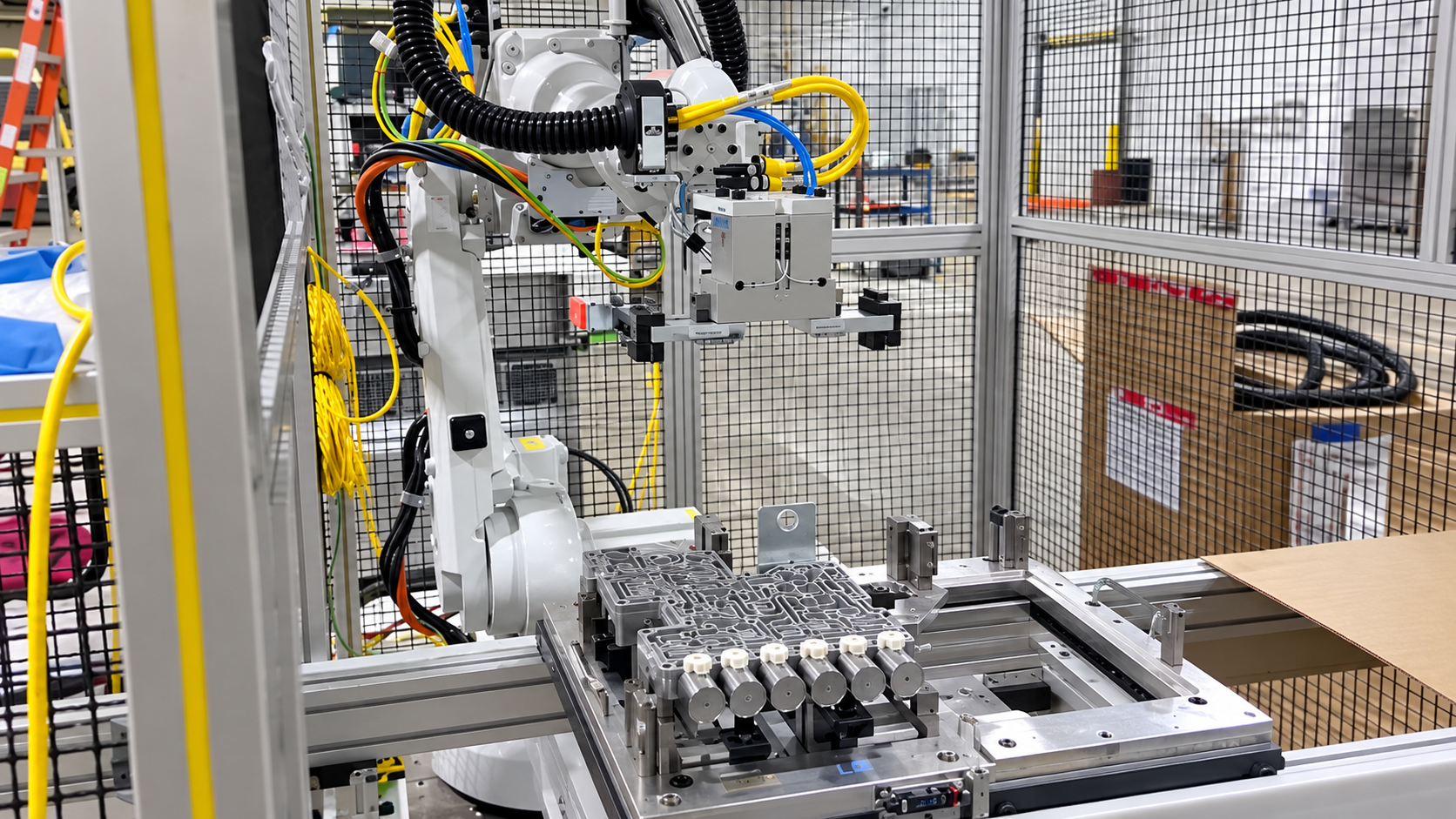

What Gilman Builds for Material Handling
Custom Material Conveyance & Transfer
Every handoff between operations is a chance to lose time, position, or quality. GILMAN designs custom conveyance and transfer systems around your parts, layout, and cycle time, delivering each part in the right orientation at the right moment, with no manual handling required.
Accumulation Systems
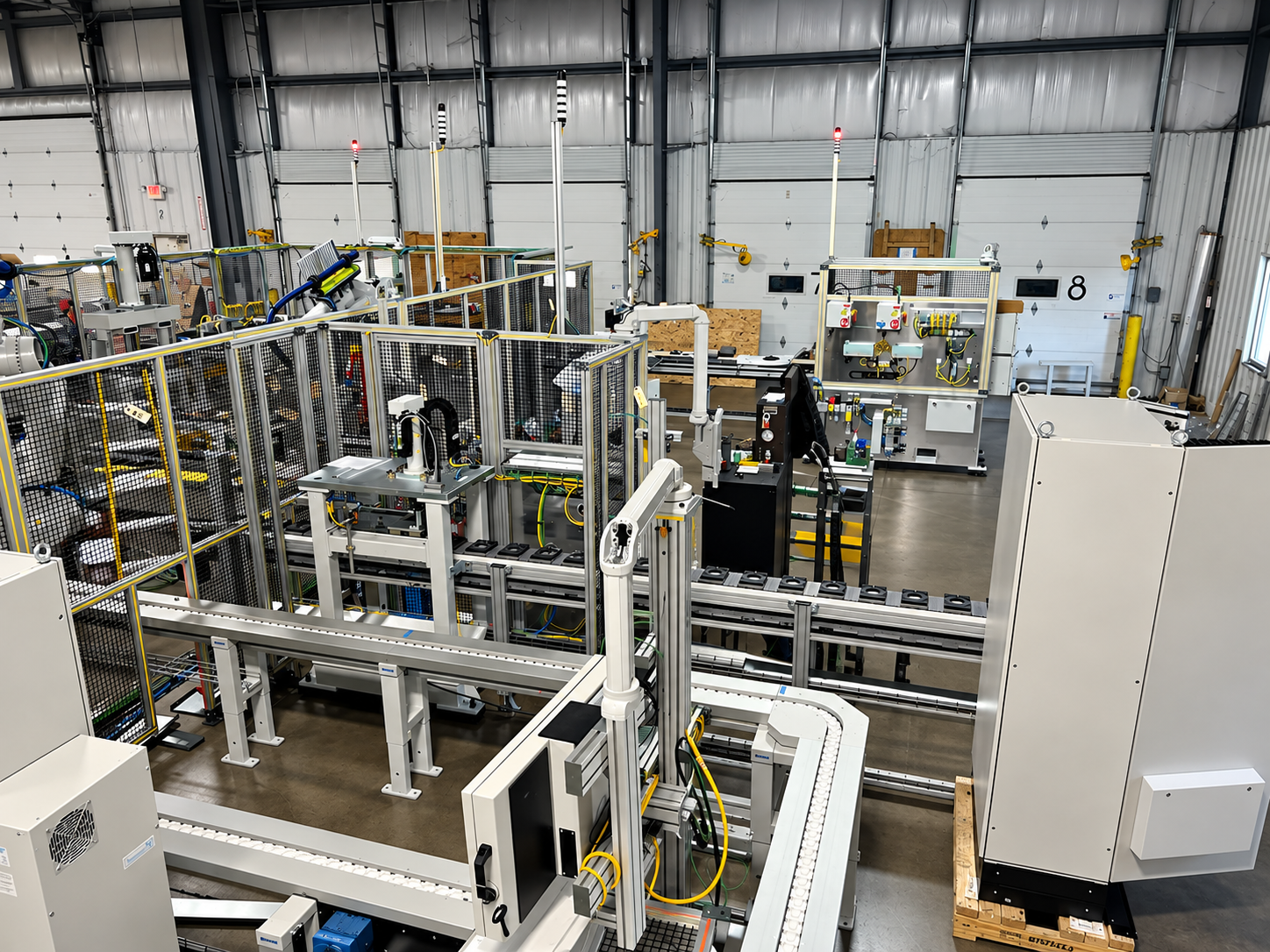
Stations rarely run at exactly the same speed. Accumulation systems build a buffer of product between them, using sensors to regulate flow so a slow or stopped station won't block the line upstream or starve it downstream.
Robotics & System Integration
A material handling system is only as reliable as the controls tying it together. Our engineers integrate robotics, sensors, and third-party equipment into one cohesive system, so the whole line performs predictably.
THE VALUE OF AUTOMATED ASSEMBLY EQUIPMENT
-
Waste and rework drive up the real cost of production more than most manufacturers realize. Automated assembly stations cut both by doing the same job the same way every time, which means the return on investment isn't theoretical, it shows up directly in your production costs within a measurable timeframe.
-
Precision and consistency go hand in hand. Automated stations don't just work faster, they work the same way on part one million as they did on part one, which means fewer parts are rejected and fewer hours are spent on manual rework and inspection.
-
Manual assembly has an output ceiling. Automated equipment raises that ceiling significantly, which means a larger contract or a sudden spike in demand doesn't require hiring and training additional resources.

Have more questions?
See examples of Our Work?