

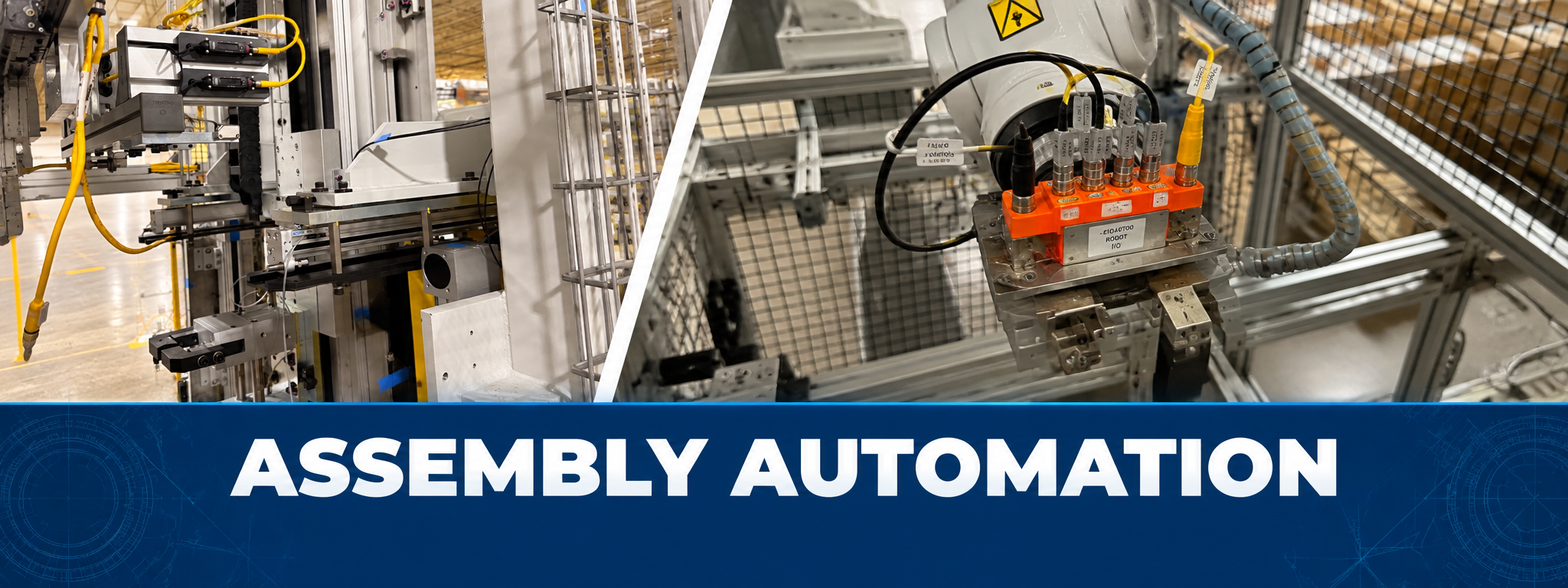
Assembly Automation That Fits Your Process
Keeping up with labor shortages and rising labor costs while still meeting production demands is a real challenge for manufacturers today. Automated assembly equipment addresses both at once, but getting it right means partnering with a team that understands production line automation down to the smallest detail.
Whether you're assembling small precision components or larger parts, GILMAN evaluates your entire process. Before recommending a system GILMAN considers throughput, how components are handled, assembly sequence, and inspection. That's what turns an automation investment into a real, measurable return rather than an expensive guess.
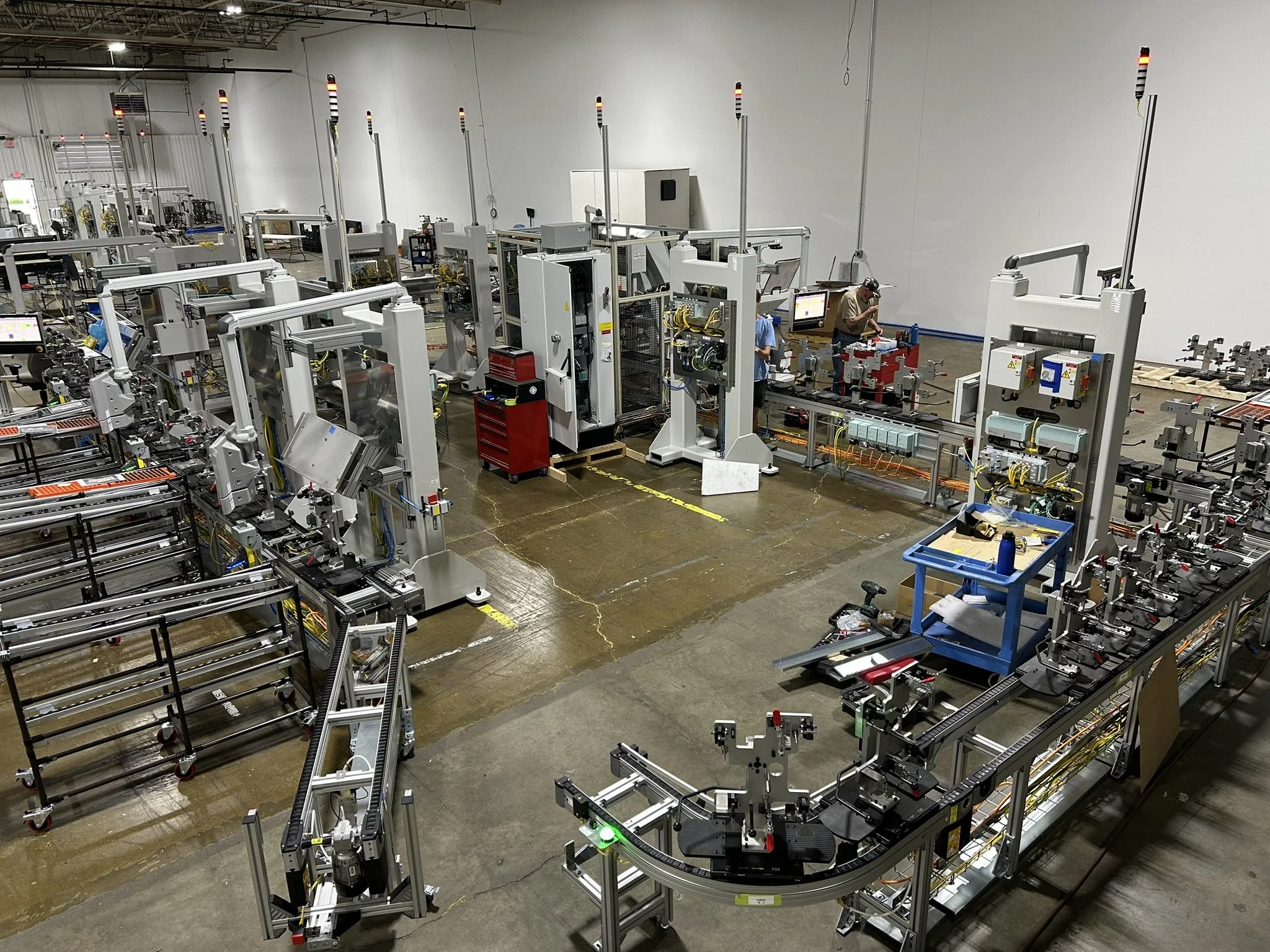

Where Gilman Delivers for Automotive Manufacturers
Continuous Operation Without Downtime
A manual station slows down for breaks, shift changes, and simple human fatigue. An automated station eliminates these factors, which means the hours you're paying for are actually producing parts.
Process Control and Quality Inspection
Consistent quality at high volume depends on catching problems immediately, not several stations downstream. We design systems that integrate with your existing SCADA for real time monitoring, PLCs and HMIs to manage data acquisition, and machine vision to catch defects as they happen, protecting both your product quality and your margins.
Process Repeatability
When the same steps happen in the same order every time, there's no variability left to account for. That's what actually drives consistent quality and predictable cycle times, not a faster machine on its own, but one that never skips a step or does them out of order.
End of Line Automation
The final steps of a production line, palletizing, wrapping, sorting, and shipping preparation, carry real risk for damage and errors when left to manual handling at high volume. We design automated systems for these final stages so packaged product leaves your facility correctly labeled, wrapped, and ready to ship, every time.
Repeatable Positional Accuracy
Placing a part within a fraction of a millimeter, over and over, gets harder for a person to do consistently as a shift wears on. It's a routine task for automated equipment, which holds the same precision on the last part of the day as it did on the first.
Custom Process Development
Not every consumer product fits a standard automation package. Gilman's engineering team works directly with you to develop custom systems built around your specific product, your production goals, and the flexibility to adapt as your line evolves.
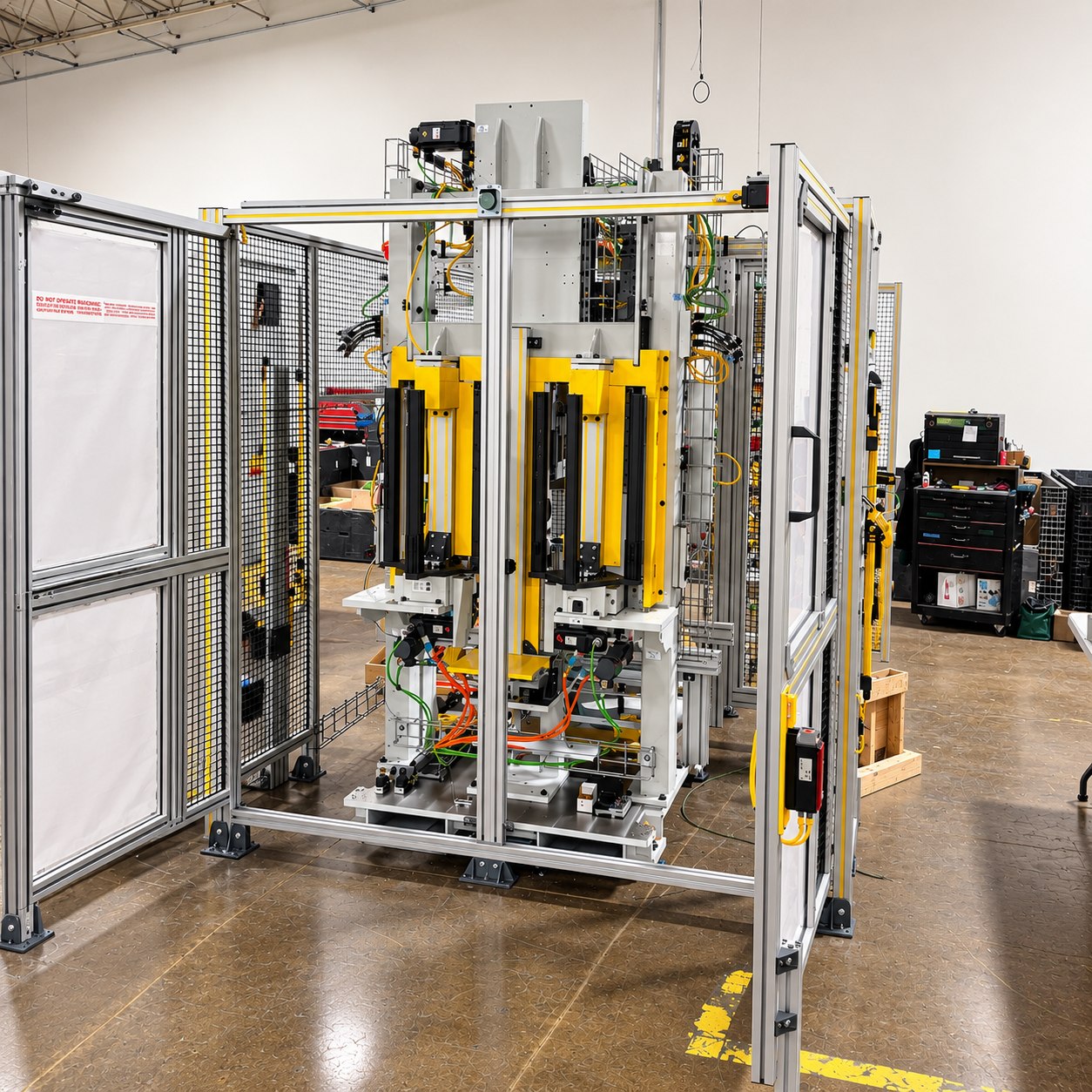
THE VALUE OF AUTOMATED ASSEMBLY EQUIPMENT
-
Waste and rework drive up the real cost of production more than most manufacturers realize. Automated assembly stations cut both by doing the same job the same way every time, which means the return on investment isn't theoretical, it shows up directly in your production costs within a measurable timeframe.
-
Precision and consistency go hand in hand. Automated stations don't just work faster, they work the same way on part one million as they did on part one, which means fewer parts are rejected and fewer hours are spent on manual rework and inspection.
-
Manual assembly has an output ceiling. Automated equipment raises that ceiling significantly, which means a larger contract or a sudden spike in demand doesn't require hiring and training additional resources.

Have more questions?
See examples of Our Work?